

On July 14, Israeli Transport Minister Miri Regev halted additional CENTCOM military landings at Ben Gurion Airport. American refueling aircraft had occupied civilian aprons well past an agreed cap of 20 planes, reaching 33 by the time Regev acted, and the buildup was threatening roughly 50,000 civilian summer tickets. The dispute read, at first glance, as a narrow diplomatic irritant over airport real estate. It is also a preview of what happens to the United States’ domestic wildfire response the next time overseas demand and a bad fire season land in the same month.
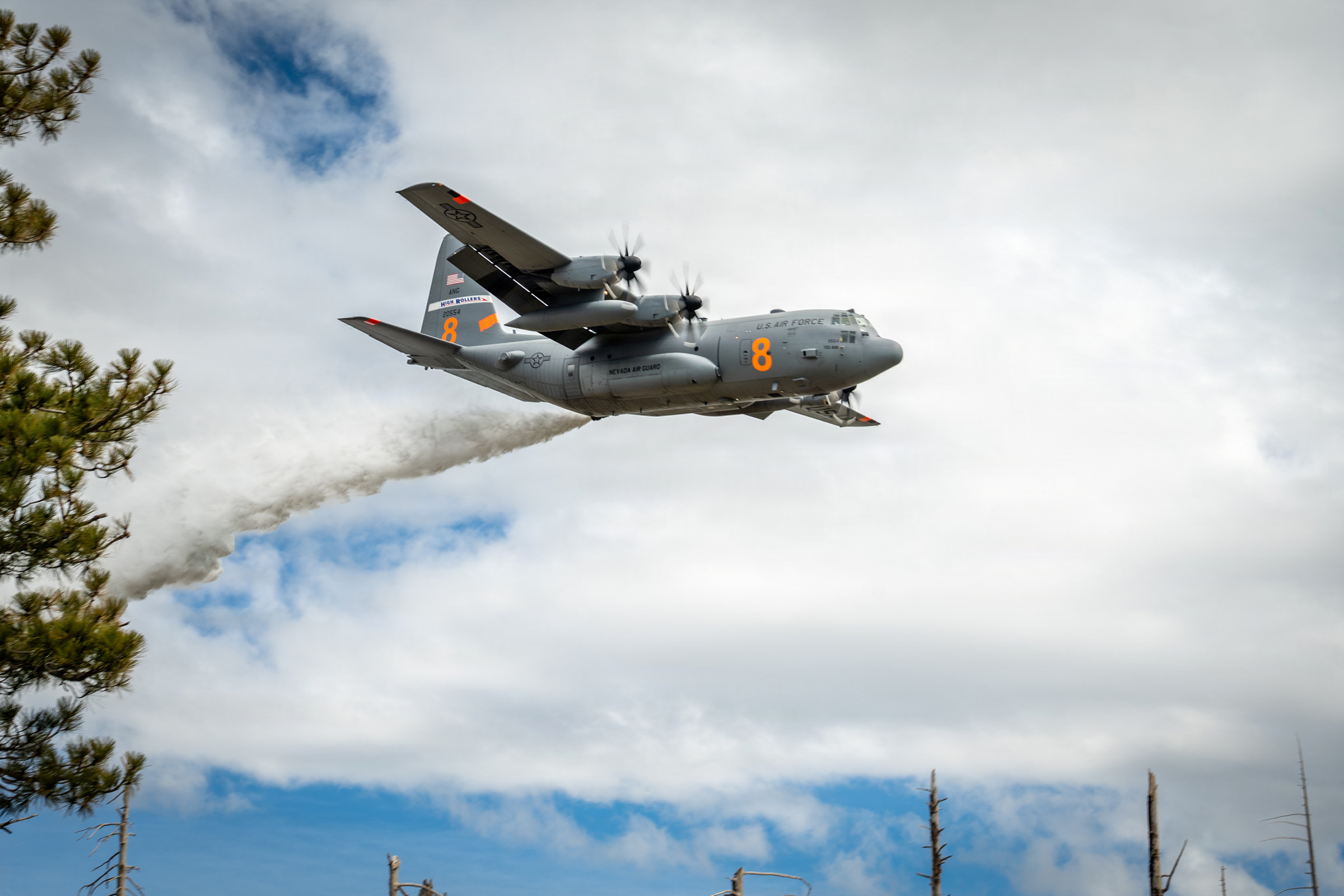
The C-130 fleet that the Air National Guard leans on for both missions is the same fleet. When those aircraft are tied up refueling tankers over the Eastern Mediterranean, they are not sitting on ramps in Colorado Springs or Channel Islands, ready to be fitted with a Modular Airborne Fire Fighting System and sent to a fire line. The Ben Gurion standoff shows how quickly a single regional deployment can consume the same airframes wildfire commanders count on as their surge capacity.
“The refueling aircraft are a strategic asset for the United States in the region,” a senior Israeli defense official told Ynet and the Times of Israel on July 14. “From an operational standpoint, it is important that they be able to operate under the conditions set by the Americans.”

Guard units already stretched thin
Even without a foreign deployment competing for airframes, the Guard’s C-130 fleet is mid-transition. Units in Colorado, California, Nevada and North Carolina are converting from C-130H to C-130J models, a process that pulls crews into simulator and type conversion training rather than fire standby rotations. A fatal K-MAX helicopter crash in Colorado on July 14, the same day as the Ben Gurion dispute, underscored how thin the margins already run even in Tier 2 rotary operations, let alone the heavy end of the fleet.
Congress has been trying to consolidate the civilian side of this picture. The Department of the Interior’s June 2025 budget brief established the unified U.S. Wildland Fire Service, folding Forest Service and Interior wildfire operations into a single command structure with a combined FY2026 request of $6.55 billion. That total breaks down into $1.39 billion for suppression, $1.1 billion for preparedness and aviation, $1.876 billion for the National Forest System, and $1.0 billion for forest operations.
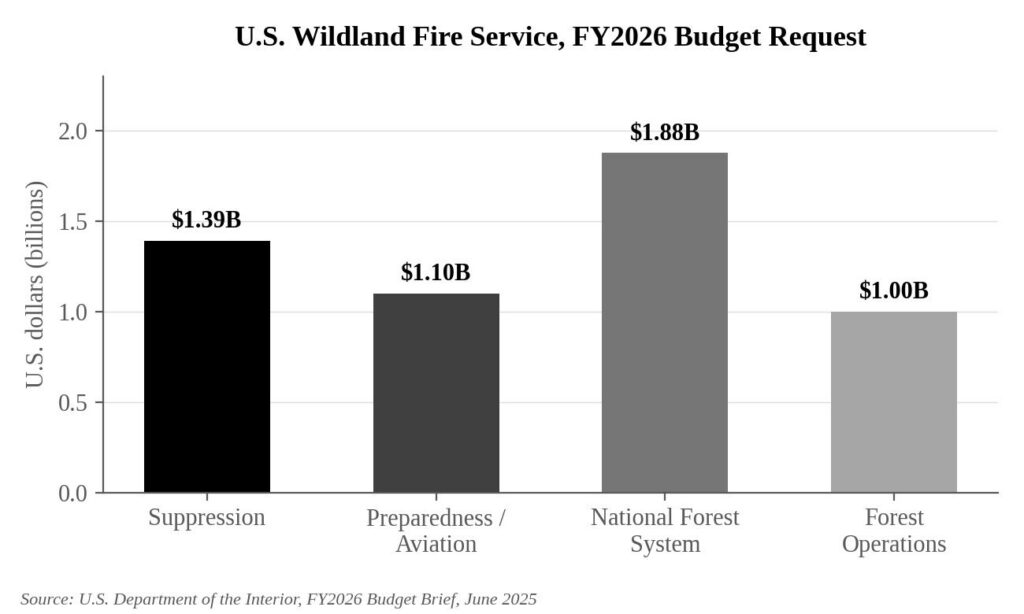
Figure 2. FY2026 budget request for the consolidated U.S. Wildland Fire Service.
The House Appropriations Committee went further on May 20, releasing an FY2027 Interior bill directing $2.628 billion specifically to wildland fire management and mandating interoperability across the agencies that now sit under the unified command. None of that money buys a single additional MAFFS capable C-130. It funds the civilian half of the layered system while leaving the heaviest tier dependent on whatever the Air National Guard has left over after its overseas commitments.
Two arguments, one gap
Commercial air tanker operators argue the fix is simple: award multi-year federal contracts and let private fleets absorb the entire domestic surge requirement, making military MAFFS units unnecessary. Defense officials counter that cross-wing training keeps C-130 crews mission ready regardless of where individual airframes are deployed at a given moment. Both arguments assume a stable baseline that the Ben Gurion episode just demonstrated does not exist. A foreign government can, on a single day, restrict landing rights and expose exactly how thin the shared fleet has become.

The next concrete test comes when the FY2027 Interior appropriations process reaches conference committee later this year. Whether lawmakers fund a genuinely independent civilian heavy tanker reserve, rather than continuing to lean on Guard airframes that answer to CENTCOM first, will determine whether the country’s wildfire backstop survives its next concurrent crisis intact.